

In agency life, few lines test my patience more than “B2B doesn’t need to be boring.”
But instead of rolling my eyes, I’ll explain why this is not, to my humble understanding, the clever advice it sounds like.
Let’s start by setting the record straight: B2B might need to be boring sometimes.
The catch: Not any brand of boring will work.
Only intentionally boring will.
That’s the distinction that matters: Boring by design vs. boring by default.
Boring by design
Some brands choose boring, and they do it well.
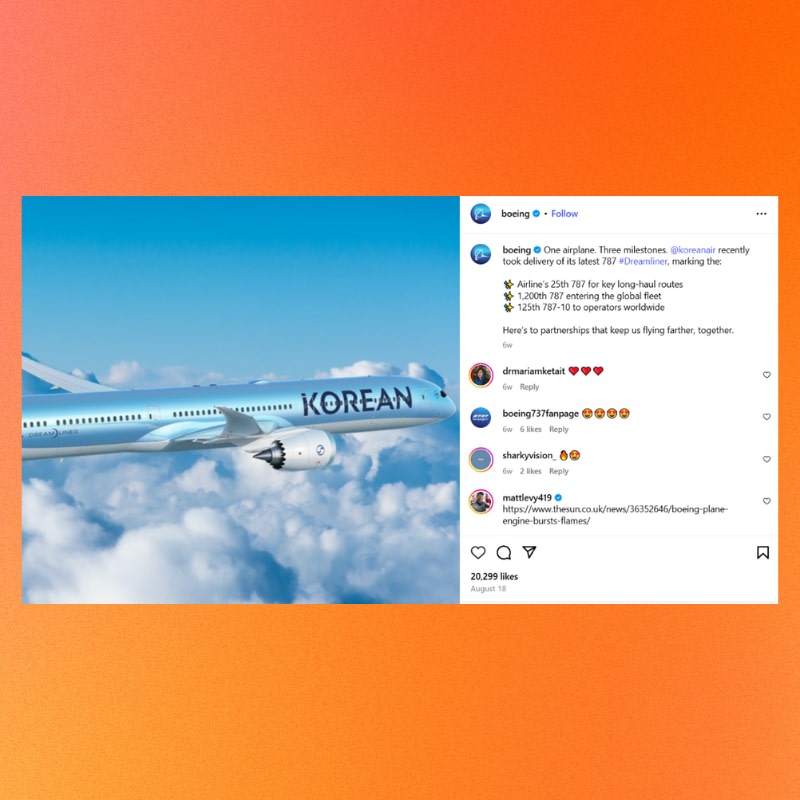
The first example that comes to mind is Boeing and its “jets over jokes” strategy.
Another example is Deloitte.
They’re not dancing their way out of TikTok virality.
Instead, they’re doing remarkably well on stuff like 39-minute-long livestreams of “Health System Transformation”.
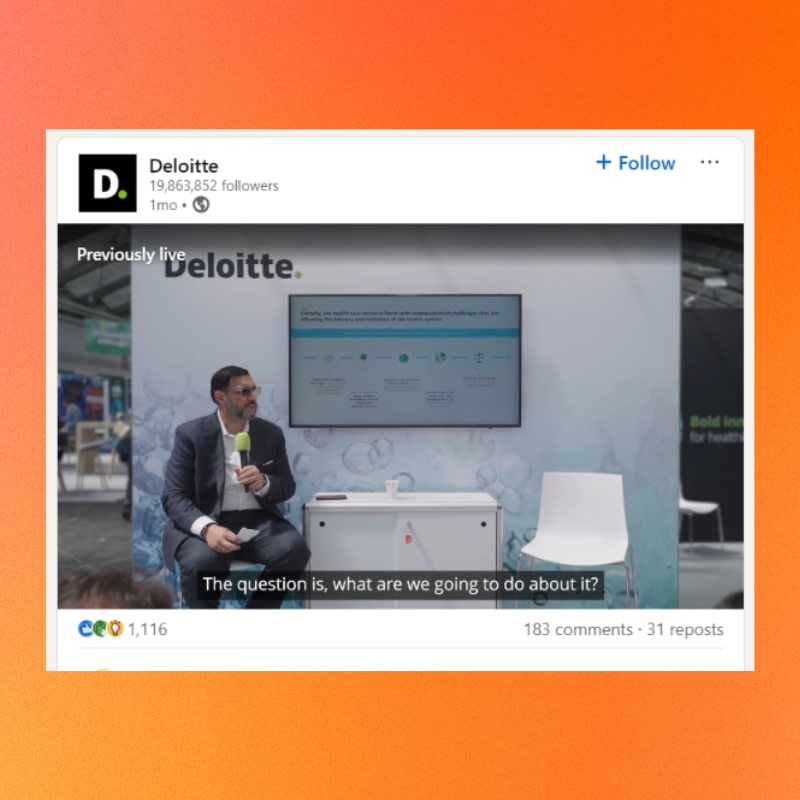
For these brands, boring ties to what their customers value the most in them: Stability, predictability, reliability.
The key is intentionality (but also, knowing who you’re addressing and why).
Boring by default
This is when a brand ends up boring not because they chose to, but because nobody chose at all.
It happens all the time in legacy industries.
A bank inherits its corporate voice from decades-old annual reports.
A logistics company posts copy-pasted press releases because “that’s how we’ve always done it.”
A chemical manufacturer stays invisible because leadership doesn’t see social as worth their time.
Sure, it might feel safe on the surface, but that’s what (also) happens when:
- The audience doesn’t register the brand.
- The reach is low.
Default boring is dangerous because it’s mostly invisible.
The irony is that boring by default could move into boring by design (and even calculated risk) with a few intentional choices.
The case for risk
The good news is that brands are not subject to a binary choice.
On top of “boring by default” and “boring by design”, there’s risk.
And we don’t mean risk as in chasing meme trends without context or firing spicy replies.
The best risks are calculated. The goal is to be remembered without losing credibility.
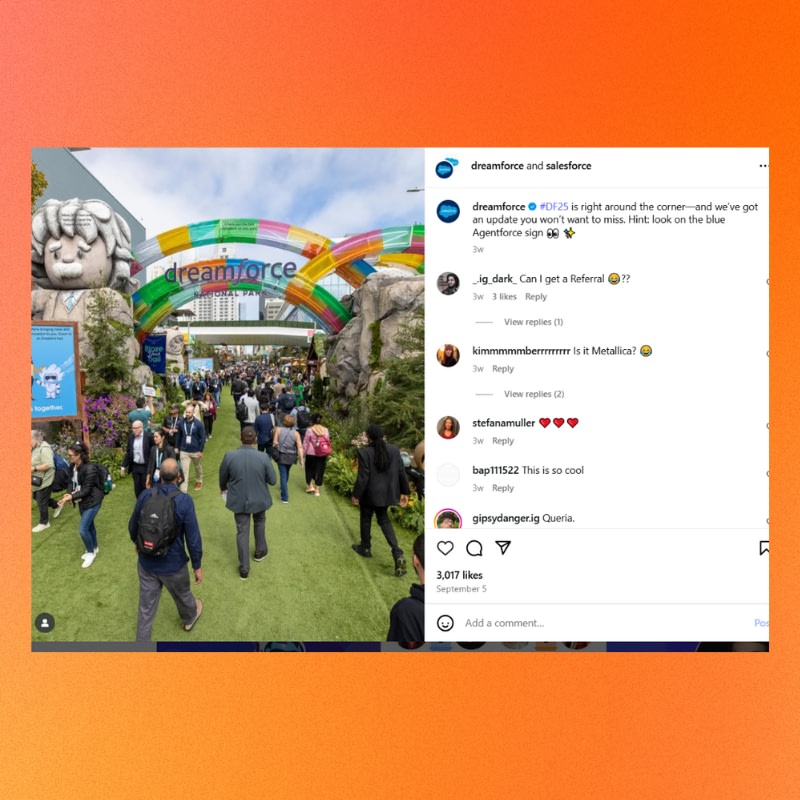
Salesforce can teach us a lesson here with its yearly Dreamforce event.
Part rock concert, part tech carnival, part cultural spectacle. Is it risky to spend that much on experience? Absolutely.
But it works because it creates memory, and memory drives preference.
Another example, more experimental, is AdTechGod, a multi-platform channel (LinkedIn, Instagram, X, Threads) to discuss adtech news and share memes.
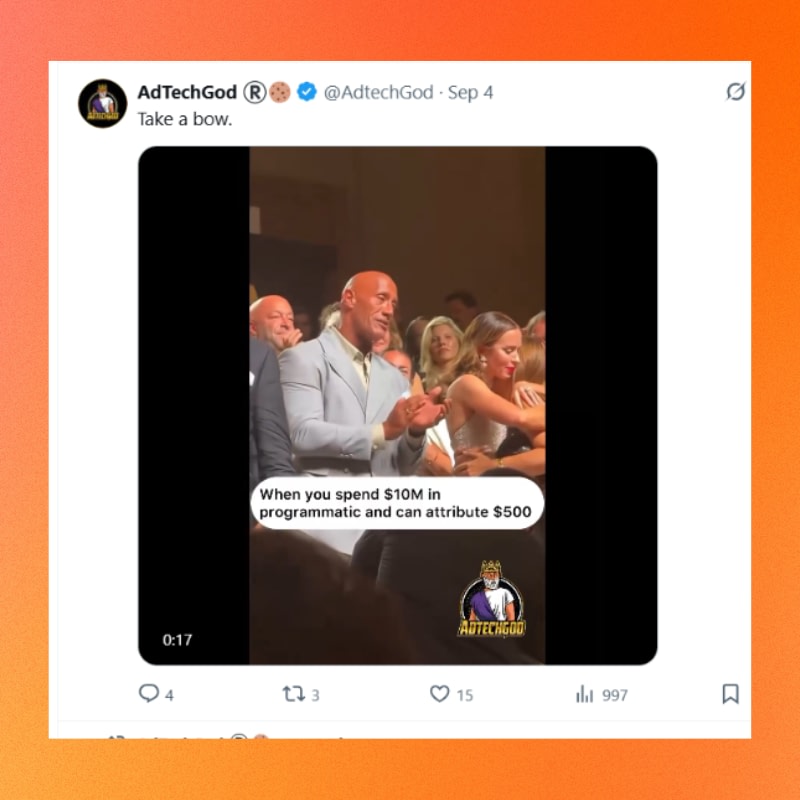
This strategy is supported by Marketecture (a B2B media company), and it’s an excellent example of calculated risk.
Instead of going overboard, they created their own space to:
- Discuss topics that don’t fit the main brand page in their social channels.
- Keep a hysterically high posting frequency.
- Relax with jokes (even if not every joke lands).
The scientifically-backed case for risk
If you need another reason to lean into calculated risk, science has you covered.
Researchers have been tracking how jokes, irony, and a little bit of edge affect memory and brand recall for decades.
Recent papers (not just old ones) confirm that humor, when used with intention, helps ads stick.
Here are four fresh sources worth knowing:
- Humor strength + message fit: Strong, relevant humor boosts ad memorability by improving attention and mood (source).
- The ADO review: It confirms humor enhances recall, liking, and purchase intent, but can backfire if it overshadows the brand (source).
- Two-sided messages: If humor fits the context, it makes ads that mix positives and negatives more persuasive and memorable (source).
- Humor in social media ads: Meme-style campaigns on social platforms earn higher engagement, which supports recall and reach (source).
Of course, risk has its limits, and recklessness backfires. You don’t want to be loud just to be loud.
The classification
Most brands fall into one of four camps:
- Boring by design: Deliberate, balanced, credibility-first.
- Boring by default: Unintentional, inherited, invisible.
- Calculated risk: Bold but measured, distinct without self-sabotage.
- Reckless risk: Loud, messy, senseless.
Only the first and the third are sustainable.
Where are you standing and what to do about it?
Take a quick audit of your brand.
If your content feels invisible, you’re probably stuck in boring by default. The fix: Make an active choice and commit.
If your content projects reliability without trying too hard, you’re likely boring by design. Stay there if it aligns with customers, watch out for stagnation.
If you’re pushing boundaries, you might be doing calculated risk. Keep testing, and adopt what works.
And if your posts are loud without purpose, you’ve crossed into reckless risk. Recalibrate and get intentional again.
Conclusion
Boring can work. Boring by design is strategic and produces tangible results (leads).
Risk can work, too. Calculated risk leads to memorable, to brand fame.
What doesn’t work is boring by default, and not choosing at all.
Have a question? Get in touch, and let’s talk about it.