

Reddit is getting serious attention from B2B marketers. This shows in the platform’s revenue figures, but also in comment threads outranking blogs, and in how AI answers cite Reddit.
We already covered the basics of Reddit for B2B, and still, all of this "Reddit is having a moment" is not a strategy.
For B2B brands in particular, the right question is not “Should we be on Reddit?”, but:
Are your buyers even on Reddit?
And if they indeed are, you’ll want to follow up with:
What does showing up there require?
We have a framework for assessing whether a brand fits Reddit or not; but before we get to that, it helps to understand where Reddit fits in the buying journey.
How Reddit fits into the buying journey
We think about the B2B buying journey in three stages: Discover, Shape, and Choose.
Reddit can play a role in all three:
Discover: Reddit threads get visibility for buying keywords/intent (in Google, AI conversations, in native Reddit search). Your prospects find peer conversations before they find your website.
Shape: Your brand shows up in conversations where vendor perception is formed (with or without you being part of this process).
Choose: Someone posts "X vs Y — which one?" and users vouch for one or more brands.
However, none of this happens automatically, but there are tell-tale signs to check before deciding how — or whether — to show up.
And this is what this framework helps you figure out.
Five signals to assess Reddit in your category
Assessing Reddit for your brand starts with knowing what to look for.
Most marketers check the subscriber count and stop there. There's a fuller picture available — and it takes five signals to get it.
1. Search overlap
The most concrete signal to start with. Open an incognito browser and google your top 10 buying-category keywords.
Exclude branded searches, and go for problems and comparisons your buyers search.
If we use HR as an example niche, some of these searches could be:
- Best HRIS for mid-market.
- BambooHR vs Rippling.
- EEO-compliant performance management tool.
If Reddit results pop up in the top search results, then it is already part of the discovery path.
The second most important thing after presence is quality.
Aka, a 2022 thread with three comments is weaker than a 2025 thread with 80 comments and insights getting the most upvotes.
If you want to go further, read the language in those comments.
Is it awareness-level ("what is X?") or decision-level ("we're evaluating X”)?
| Strong | Moderate | Weak |
|---|---|---|
| Reddit threads on page one for multiple buying keywords, recent, active, decision-stage language throughout. | Reddit surfaces for some keywords, mostly informational, or only when you append "reddit" to the search. | Reddit barely surfaces. When it does, threads are old, low-engagement, or off-topic. |
2. Community depth
Finding a relevant subreddit is not the same as finding your buyers. This is where some assessments go wrong.
To find relevant communities, start with Reddit's native search engine.
Type your product category, then filter the results to Communities.
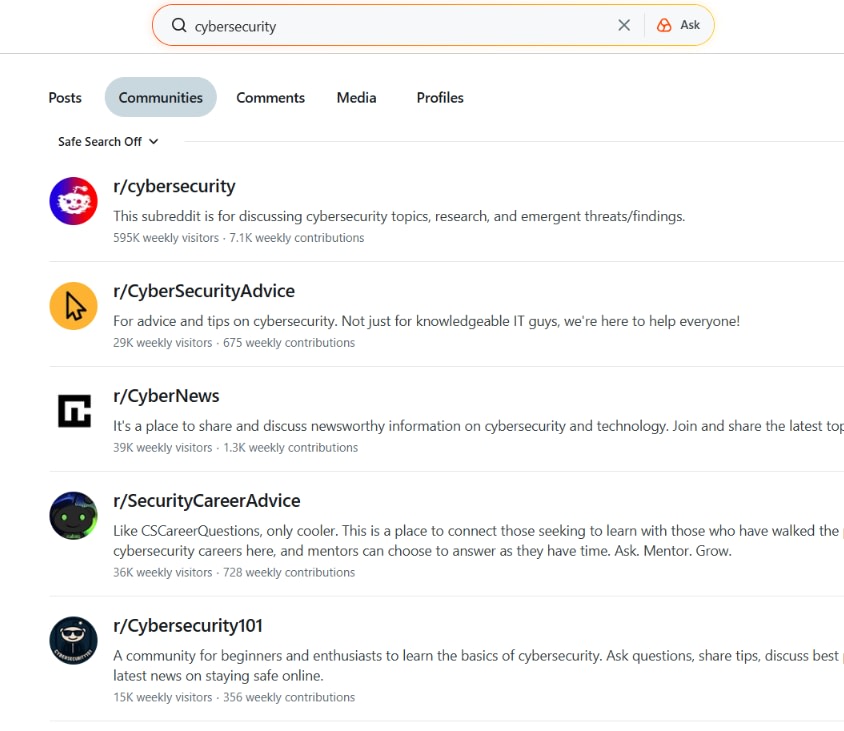
Reddit also displays a “Related communities” section in the feed of every community, so keep an eye out for it.
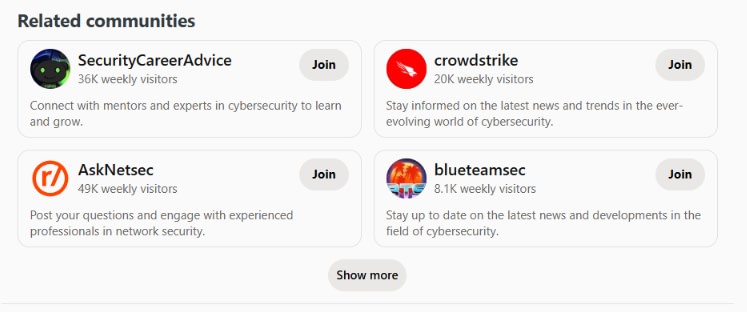
Once you have a list, we’ll check each community individually.
Here, we’ll want to look beyond member count. A subreddit with depth has:
- Recent posts with substantive comments (not just upvotes).
- A mix of text posts and discussions rather than a feed of external links.
- Active back-and-forth in comment threads.
- Members who know their domain.
Strong: Multiple active subreddits with real volume, recent discussion, and clear practitioner presence.
Moderate: One or two relevant subreddits with moderate activity.
Weak: No relevant subreddits, subreddits that exist but are dormant, spam, and bot-filled feeds.
3. Conversation intent quality
Community depth tells you people are there. Conversation intent tells you what they're doing while they're there.
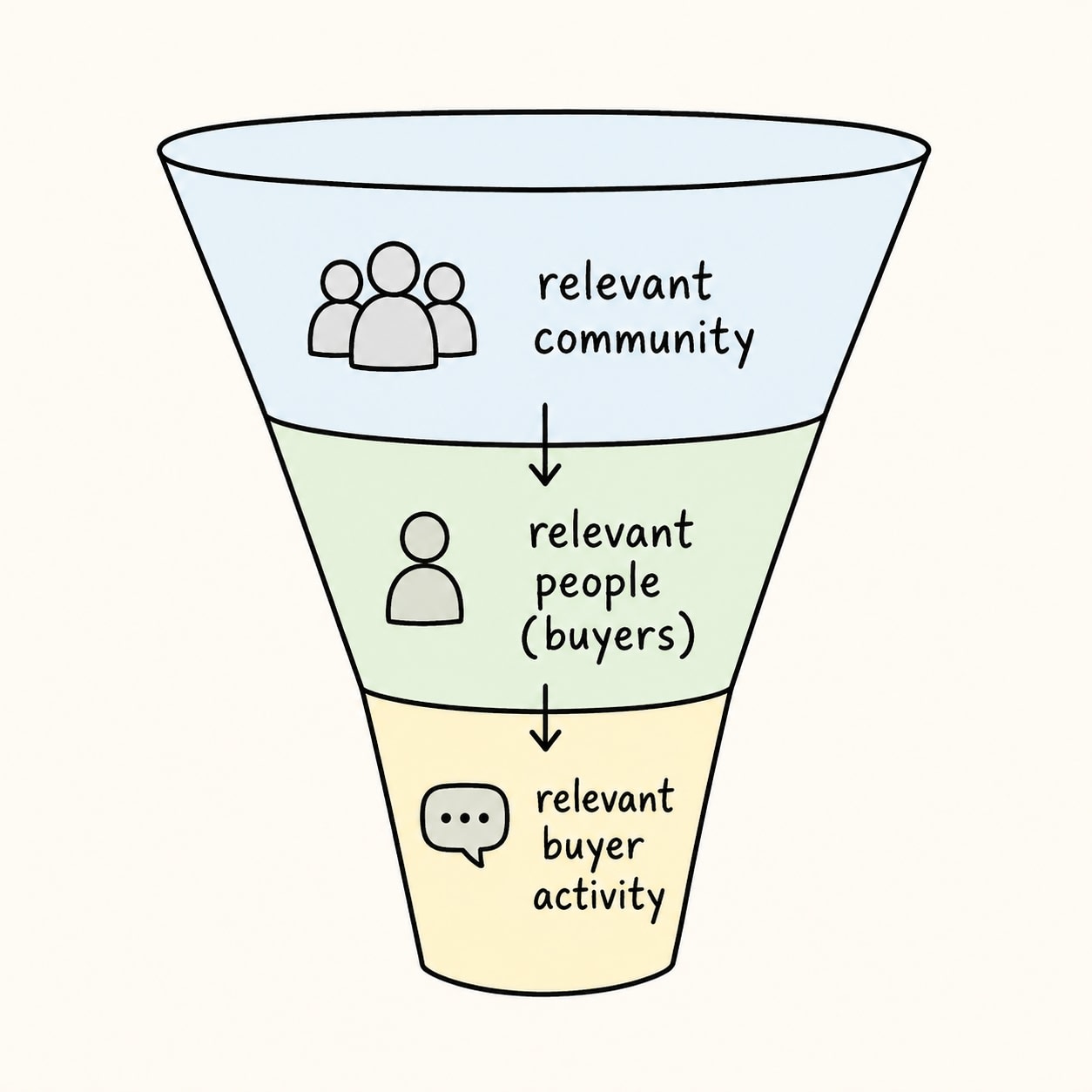
There's a difference between a subreddit where people discuss their industry in general terms and one where people are evaluating vendors, describing switching decisions, and asking for recommendations.
The first is awareness-level. The second is where Reddit becomes a buying channel.
To assess this, spend time reading through communities.
Sort the feed by Top posts of the past year, and look for language that signals either awareness or buyer intent.
Also check how comments are sorted. Top comments with high upvotes reflect community consensus (useful for understanding what the community believes).
Strong: Decision-stage language throughout: evaluations, comparisons, switching stories, specific use-case questions.
Moderate: Mix of awareness and consideration content, some vendor discussion but mostly informational.
Weak: Mostly "what is X?" questions, no vendor comparisons, no purchase-intent language.
4. Competitive presence
How your competitors show up on Reddit (or don’t) is worth your attention.
Competitors being recommended in threads is a positive signal: It means the community trusts vendor input enough to surface it, and that Reddit is functioning as a recommendation layer for your category.
Competitors actively participating in discussions is a different signal. It tells you the channel is relevant enough that they're investing in it.
This is where you need to read carefully. In some communities, any vendor presence gets treated with suspicion.
Identifying whether your competitors are being welcomed, tolerated, or resented tells you what’s possible for your brand, too.
Also pay attention to absence. If no vendors are participating in an otherwise active community, ask why. Common reasons include:
- Subreddit rules prevent this.
- Community culture acts as a blocker.
- An actual untapped opportunity!
Strong: Competitors recommended or actively participating and being received positively/neutrally.
Moderate: Competitors mentioned but not actively engaging, or engagement is neutral/not engaged with.
Weak: Competitors absent, or present but visibly unwelcome.
5. Brand sentiment and mention velocity
The last signal is about your brand specifically.
Search your brand name directly in Reddit — both in Reddit's native search and via Google (site:reddit.com [your brand name]).
You're looking for two things: What people are saying, and how often.
Sentiment matters for obvious reasons. Consistent hostility is a different problem (and showing up on Reddit before addressing the underlying issues will accelerate the damage, not contain it).
Mention velocity is less obvious but equally important.
A brand being discussed regularly — even with mixed sentiment — is a brand that Reddit's communities have formed opinions about.
That's a foundation to work with.
A brand that's barely mentioned has a different challenge ahead: Building a presence at zero in a community that doesn't yet have a frame of reference for it.
Strong: Regular mentions, constructive or positive sentiment, volume trending up.
Moderate: Occasional mentions, mixed or neutral sentiment.
Weak: Rarely mentioned, or mentioned with consistently hostile sentiment.
Your Reddit action plan: Monitor, engage, amplify
Once you've mapped your signal pattern, you have enough to build an action plan. Here's what we recommend based on what those signals show.
If the signal is weak = Monitor
Listen to what your buyers are saying, track how competitors are being discussed, and feed those insights into your content and sales enablement.
Monitoring doesn’t require an elaborate Reddit presence and can be almost fully automated.
Tools worth using:
- Reddit's native search
- Google (site:reddit.com [your keywords])
- Custom automations for social listening across channels and posts
If the signal is moderate = Engage
Value-first content plus active participation in the conversations that follow.
These are one commitment, not two. If you post something useful, you need to stick around for the replies.
Measure through share of voice, sentiment trajectory, and inbound attribution.
If the signal is strong = Amplify
Reddit ads layered on top of either of the above.
Amplification can work alongside monitoring (promoting content to relevant subreddits without organic participation) and engagement (boosting your best organic contributions).
| Signal pattern | Recommended path |
|---|---|
| Strong across the board | Engage + Amplify. Reddit is already a buying channel in your category. |
| Strong search overlap, shallow communities | Engage + Amplify. Reddit surfaces for your keywords but the conversation isn't mature yet. Build it. |
| Weak search overlap, deep communities | Monitor + Engage selectively. Your buyers are there but Reddit isn't driving discovery yet. |
| Hostile sentiment, active competitors | Monitor first. Don't walk into a room where people are already annoyed at you and start talking louder. |
| Minimal signals across the board | Don't force it. Revisit in 6-12 months. |
Three examples of how this framework applies IRL
Here's how the framework plays out across three real B2B categories, based on what's actually happening in these communities right now.
Reddit for cybersecurity: Strong signals w/cultural ceiling
Key communities: r/netsec, r/cybersecurity, r/sysadmin, r/asknetsec.
Search overlap: Strong. Search "best SIEM for mid-market" or "CrowdStrike vs SentinelOne" and Reddit threads appear on page one, above vendor websites.
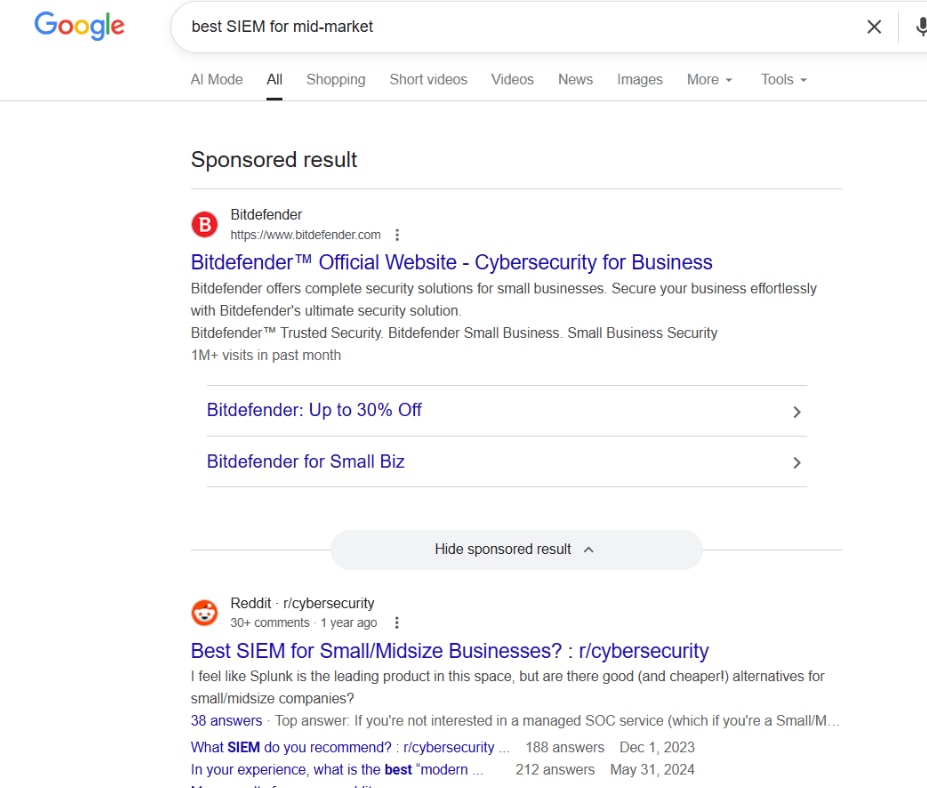
Community depth: Deep, practitioner-led. Many operators talk shop.
Conversation intent quality: High. Decision-stage language is common.
Competitive presence: Vendors are mentioned and compared regularly, but not always accepted:
- r/netsec explicitly filters promotional content in its rules.
- r/cybersecurity threads regularly call out accounts that promote.
These signals are strong enough to justify investment.
On the other hand, the cultural ceiling means authenticity/transparency play an important role here.
Reddit for HR: receptive culture, buyer fidelity gap
Key communities: r/humanresources, r/recruiting.
Search overlap: Moderate. Some buying keywords surface Reddit threads, though less consistently than in cybersecurity.
Community depth: Real and organized. Both subreddits use post flair to categorize by topic.
Conversation intent quality: Moderate to strong. Threads comparing BambooHR vs Rippling or asking for HRIS recommendations at specific company sizes appear regularly and get replies.
Competitive presence: Vendors are discussed and sometimes welcomed. HR professionals are used to evaluating tools and aren’t particularly hostile to vendors.
Brand sentiment: Generally constructive. Mixed reviews are common and accepted as normal.
Reddit for EdTech: structurally excluded
Key communities: r/Teachers, r/education, r/edtech.
Search overlap: Moderate. Education queries surface on Reddit regularly, but mostly practitioner discussions rather than vendor-related topics.
Community depth: Large and active. Educators discuss tools, policy, and classroom challenges.
Conversation intent quality: Low for vendor purposes. These are professional and pedagogical conversations, not buying ones.
Competitive presence: Absent by design. A pinned moderator post on r/edtech, enforced since 2020, quarantines developers and salespeople into a monthly megathread.
The community is large. The conversations are valuable for listening. But the path to engagement is blocked.
What to do with your results
If you've made it this far, you now have a cleaner picture of whether Reddit is worth your time and budget.
The framework won't decide for you, but it will tell you:
- Whether the signals are there.
- Whether the communities are real/active/deep/receptive
- Whether your brand is ready to show up.
If the signals point toward Engage or Amplify, the next question is execution.
If you want to talk through what that looks like for your specific B2B niche, we're easy to reach.
And if the verdict is Monitor, that's a legitimate place to start, too.
Reddit will still be there when you're ready.