

It’s 8:13 in the morning. A VP of Marketing takes a sip of coffee, unlocks their phone, and taps into the exec WhatsApp group.
A quick scroll, and there it is: your content — although not as a link with a preview, but as a screenshot shared by a peer.
Cheered up already?
Then let’s address the elephant in the room: Odds say you’ll never be able to attribute that view in any meaningful way.
If it was shared as a screenshot, you get nothing to track.
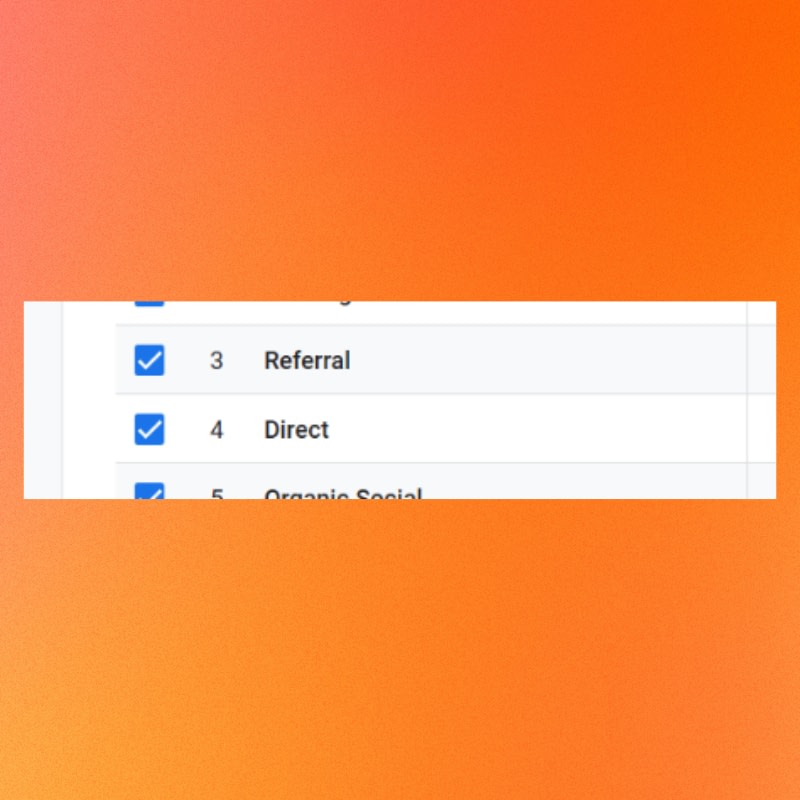
If it was shared as a regular link it’d still be very hard to notice. At best, just an anonymous +1 in your count of referral (or direct) traffic in your traffic acquisition dashboard in GA4.
And yet, that virtually untrackable share on a private channel might be the most valuable impression you’ve had all month.
Welcome to the world of dark social: The digital equivalent of a whisper that reaches the right ears.
At Sculpt, we’ve navigated this landscape thoroughly, both as members of private groups, but also helping clients play the game.
And today we’ll share what we’ve learned about dark social with you.
Dark social 101
Dark social refers to the sharing of content through private channels such as direct messages, emails, and messaging apps, where the source of the content is not easily tracked.
But why is it so important?
First, dark social is more common than many people realize.
Anyone who's checked into a WhatsApp group, a Slack workspace, or a Discord community can attest to how active things can get, and how relevant the content shared there is.

Second, dark social is more focused.
Public feeds are noisy and littered with stuff we don’t care about. The competition for attention is too high.
Dark social channels, on the other hand, serve a specific purpose for determined groups of people.
Third, content in dark social comes embedded in a layer of trust.
It isn’t posted for likes, but shared to inform, discuss, or arm someone with a useful talking point. Before that content reaches the rest of the group, it passes through someone who shares interests with you.
And finally, there's the privacy factor.
Dark social doesn’t get tracked, there’s no algorithm profiling your interests (well, not as directly at least). For some, that’s a nice plus.
The analytics black hole (and what to do about it)
The lack of metrics in dark social is why many execs dismiss it entirely and without second thought.
The challenge, however, doesn’t go away because of that: How do you market in an environment where success is invisible?
Our answer: Focus less on measurement and more on momentum. This is long-game territory.
The value of posting the content that people pass around privately isn’t in the weekly report, but in the trust and positioning you accumulate over months and quarters.
Also, some brands circumvent (or accompany) this limitation by launching their own communities, although these require more investment and commitment from the get-go.
Winning in dark social: Group dynamics and human signals
Where analytics won’t guide you, psychology may.
To get shared inside these circles, your content needs to fit the unwritten rules of the group. To tune into these, it’s important to look at:
- Status signaling: How do members earn respect in the group?
- Interest focus: Every group has an interest profile. Some thrive on spicy takes, others on pragmatic insights.
- Emotional triggers: Pride, fear, curiosity, “holy crap, you need to see this!”. Which ones work in your groups?
In order to make the most of these, think of your content as something someone might deploy to raise their own standing.
If your content helps a group member do that, you’re in.
Think of each post not as a broadcast but as a social asset someone might deploy to raise their own standing. If your content helps a group member do that, you’re in.
Factors that turn posts into screenshots
Some principles that work when it comes to making your content screenshot-friendly:
- Memorable, compact ideas: Posts that can be consumed in one glance.
- Data nuggets: Original charts and stats that double as a quick reference.
- Hot takes: Opinions that are provocative (but also defensible).
- Smart visuals: Infographics, quotable slides, side-by-side comparisons.
- Peer-relevant specificity: Language and examples that speak directly to those in a group.
The main challenge: The weight of curated connections
Here’s the uncomfortable truth about dark social: connections and access are as valuable as good content.
A killer chart or hot take won’t get you far if it isn’t picked up in the right group (organic LinkedIn content is proof of this).
Think about how exec chats work in practice:
- Every group has curators and signal amplifiers — the ones who are quick to bring something to the table.
- In some cases, the background of these curators adds a layer of credibility.
- Their choice to share can work as a sort of endorsement (aka private influencers).
This requires us to produce shareable assets, but also knowing the curators, and how to get access.
How to get started?
The good news: you don’t need to overhaul your entire marketing strategy to play dark social. Here are steps to get moving:
1. Find your circles (and find out who moderates them).
Start by identifying where your audience actually gathers (Slack communities, industry WhatsApp groups, product communities, or niche Discords)
Some are free, some require paid memberships, and others are invite-only. Don’t chase them all; pick the ones where your ICP lives.
2. Earn your seat.
Once you’re in, don’t spray links. Introduce yourself, engage in conversations, and observe. Don’t try too hard too fast.
Pay close attention to what kind of content actually gets shared and what falls flat.
3. Audit your existing content.
Which of your posts, charts, or slides could be screenshotted and dropped into a group today?
If the answer is “none,” you’ve found your starting point.
4. Design for shareability.
Break insights into compact, standalone visuals.
Package data in ways that make someone in a group think, “I’ll look smart if I share this.”
Test quotable lines and graphics that stand on their own, without needing a click for context.
5. Watch for signals.
Direct traffic bumps are pretty hard to follow, but you may get a “I heard about you from a friend” intro, or sudden inbound from accounts you haven’t targeted.
Take that as proof, and keep moving.
If you’re ready to show up in those invisible arenas, we can help. Sculpt builds strategies designed for both the feeds you can measure and the rooms you can’t.